 TapTrickTemple
TapTrickTemple
TapTrickTemple
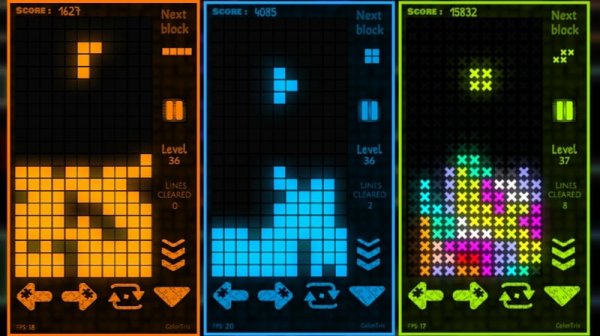
Tile Stack Challenge stands out for its clean visual design and thoughtful daily reward system. The variety of shapes keeps each session feeling fresh, while the lack of a timer allows for relaxed strategic play. The control customization is a welcome touch, making it accessible to players of all ages. It is a solid choice for anyone seeking a calming yet mentally stimulating puzzle game.
In Tile Stack Challenge, players guide a sequence of brightly colored shapes as they descend onto a playing field. The primary goal is to arrange these pieces so they form complete horizontal rows. Once a row is filled without gaps, it disappears, creating more room for incoming blocks. This cycle of placement and clearing forms the heart of the game. The challenge lies in adapting to the random order of shapes while maintaining a low stack height. Players must think ahead, considering how each new piece will fit with existing blocks. The game ends only when the stack of blocks reaches the top of the screen, so efficient clearing is essential for longer sessions.
Tile Stack Challenge features a wide assortment of block shapes, each with its own distinct silhouette. These include standard tetrominoes as well as more unusual configurations that require creative positioning. The color palette is deliberately rich, with each shape rendered in a vibrant hue that makes the playing field easy to read at a glance. Some special pieces can change color after placement, adding an extra layer of strategy. Players must decide whether to use these dynamic blocks immediately or hold them for a more advantageous spot. The visual clarity helps players quickly assess the board and plan their next move.
To keep the experience fresh, Tile Stack Challenge includes a set of daily objectives. These tasks might ask players to clear a certain number of rows, achieve a specific score, or use a particular shape type. Completing these objectives grants in-game currency, which can be used to unlock cosmetic enhancements or power-ups. This system encourages regular play without demanding long sessions. The reward structure is designed to be motivating but not intrusive, allowing players to focus on the core puzzle mechanics. Even without pursuing daily goals, the game remains fully enjoyable as a standalone puzzle experience.
Tile Stack Challenge supports multiple control methods to suit different play styles. Players can use keyboard arrows, mouse clicks, touch gestures, or a gamepad to move and rotate pieces. A quick-drop feature lets pieces fall instantly to the lowest available position, speeding up gameplay for experienced users. The interface is clean and unobtrusive, with on-screen indicators showing the next piece in queue. Settings can be adjusted to swap rotation directions or change sensitivity, making the game comfortable for left-handed or right-handed players alike. This flexibility ensures that the game is accessible to a broad audience, from young children to older adults.
While the basic rules are simple, mastering Tile Stack Challenge requires careful planning. Players must balance the urge to clear rows quickly with the need to set up future placements. Leaving gaps can create opportunities for later pieces, but also risks raising the stack height. Recognizing patterns in the sequence of shapes becomes a valuable skill over time. The game does not impose a time limit, allowing for thoughtful deliberation. This slower pace makes it suitable for relaxation, yet the escalating pressure of a rising stack provides enough tension to keep players engaged. Regular practice naturally improves spatial reasoning and reaction speed.











Player Comments
Sign in to comment
You must be logged in before posting a review or rating.
No account? Create one
No comments yet. Be the first to comment!